
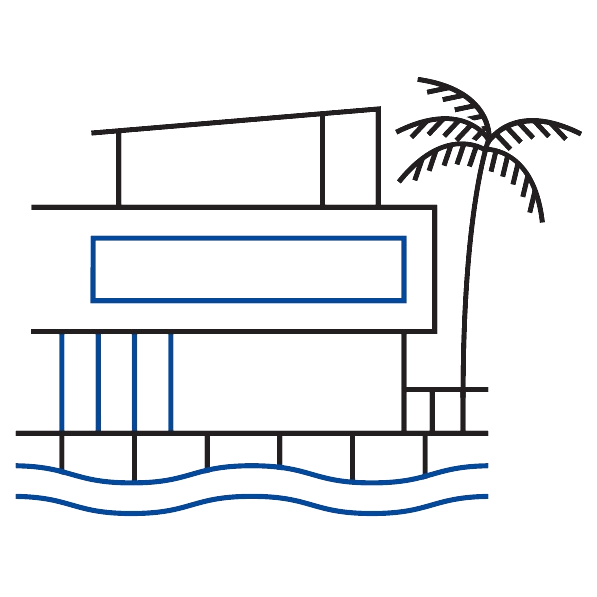
Among Florida's various flood zone designations, V-zones (Velocity Zones) represent the most hazardous coastal areas, characterized by the potential for high-velocity wave action and storm surge during hurricanes. Building within a V-zone demands the most rigorous construction standards, as structures must be designed not only to withstand inundation but also the powerful forces of breaking waves. The Florida Building Code and FEMA regulations impose strict requirements to ensure buildings in these zones can remain intact and functional after a severe coastal event.
This article will provide a comprehensive overview of V-zone construction requirements, focusing on essential elements such as open foundations (pilings or columns) that allow waves to pass through, minimum elevation standards above the Base Flood Elevation (BFE), and the use of breakaway walls for any enclosures below the elevated structure. We'll also touch upon the importance of proper anchoring and the use of flood-resistant materials. Pineland Engineering has extensive experience in V-zone design, helping clients develop resilient and compliant structures that can brave Florida's coastal challenges.
Understanding V-Zones: Florida's Most Hazardous Flood Zones
V-zones, or Velocity Zones, are the most hazardous flood zones designated by FEMA along Florida's coastlines. These areas are subject not only to inundation by floodwaters but also to high-velocity wave action, including storm surge, breaking waves, and wave-induced erosion during a 1% annual chance flood event (100-year flood). The powerful forces in V-zones necessitate the most stringent construction standards under the Florida Building Code (FBC) and FEMA regulations to ensure structures can withstand these extreme conditions and protect lives and property [1] [2].
Key V-Zone Construction Principles and Requirements
The fundamental principle of V-zone construction is to elevate the structure on an open foundation that allows floodwaters and waves to pass beneath without obstruction. This typically involves elevating the lowest horizontal structural member (LHSM) of the building to or above the Base Flood Elevation (BFE) plus any required freeboard, using pilings or columns. Solid foundations, such as continuous perimeter walls, are prohibited in V-zones as they can obstruct flood flow and be subject to immense wave pressure. All structural components below the BFE must be designed to resist the forces of waves, currents, and erosion [3] [4].
Open Foundations and Breakaway Walls
In V-zones, structures must be supported by open foundations, such as pilings, piers, or columns, that are securely anchored to resist uplift, scour, and lateral forces. These foundations must extend deep enough to account for potential erosion and scour during a flood event. Any enclosures below the elevated structure are strictly limited to non-structural breakaway walls. These walls are designed to collapse under specific flood loads without causing structural damage to the elevated portion of the building. They are typically used for parking, building access, or limited storage, and must not contain valuable property or essential services [5] [6].
Materials and Design Considerations for V-Zone Resilience
Beyond elevation and foundation type, material selection and design details are crucial for V-zone construction. All materials used below the BFE must be flood-resistant. Connections between structural elements must be robust to resist high wind and wave forces. The design must also account for potential scour around foundations. Engineers specializing in coastal construction are essential to ensure that all aspects of the design, from the foundation to the roof, comply with the FBC and FEMA guidelines for V-zones, providing maximum resilience against Florida's powerful coastal hazards [7].
Frequently Asked Questions
What is the main difference between an A-zone and a V-zone?
The main difference is that V-zones (Velocity Zones) are subject to high-velocity wave action in addition to inundation by floodwaters, whereas A-zones are primarily subject to rising floodwaters without significant wave action. This leads to much stricter construction requirements in V-zones [1].
Can I have a garage or living space below an elevated home in a V-zone?
No, living space is generally prohibited below the BFE in V-zones. Garages or other enclosures are typically limited to non-structural breakaway walls and must be used only for parking, building access, or limited storage, with no valuable property or essential services stored within [6].
What type of foundation is required in a V-zone?
V-zones typically require open foundations such as pilings, piers, or columns that allow floodwaters and waves to pass through. Solid foundations like continuous perimeter walls are prohibited [3].
FL Architecture AR102594 · Engineering PE 39202
Expert V-Zone Design for Your Coastal Project
Pineland Engineering specializes in V-zone construction requirements, providing robust structural and architectural designs that meet Florida's stringent codes. Contact us for a resilient solution.
Related Articles