
Quick Answer
Pineland Engineering (PE 39202, AR102594) helps property owners in Florida understand and address the unique requirements of Flood Zone VE. We provide expert guidance for construction in high-risk coastal areas. Contact us for Florida-wide service at (239) 420-1530.
Florida's unique geography, with its extensive coastline and low-lying terrain, makes understanding flood zones paramount for property owners and developers. Among these designations, Flood Zone VE stands out as the most hazardous, indicating areas subject to high-velocity wave action and coastal flooding during a 100-year flood event. This classification, determined by the Federal Emergency Management Agency (FEMA) through Flood Insurance Rate Maps (FIRMs), directly impacts building requirements, insurance premiums, and the overall resilience of structures. For instance, in coastal counties like Collier, Lee, and Miami-Dade, properties within Flood Zone VE face stringent construction standards. The Florida Building Code (FBC) 2023, in conjunction with ASCE 7-22, mandates specific elevation requirements and structural designs to withstand the immense forces of storm surges and breaking waves. Pineland Engineering specializes in navigating these complex regulations, ensuring that your project not only complies with state and local ordinances but also provides maximum protection against the elements. Ignoring these designations can lead to significant financial losses, permit delays, and unsafe structures. Our expertise helps clients in areas like Naples, Fort Myers, and Miami understand the implications of a VE zone designation and develop robust, compliant solutions.
Defining Flood Zone VE and Its Impact on Florida Properties
Flood Zone VE, often referred to as the Coastal High Hazard Area, is characterized by the potential for 3-foot or greater breaking waves during a base flood event.
This designation is critical for Florida properties, particularly in vulnerable areas such as the barrier islands of Pinellas County or the Keys in Monroe County. The FBC 2023, Chapter 16, and specifically ASCE 7-22, Chapter 6, provide detailed criteria for structures within these zones. For example, in unincorporated Collier County, the Growth Management Department's Building Review section will strictly enforce these provisions, requiring detailed flood plain management plans. The impact extends beyond construction, influencing property values, insurance costs, and the feasibility of certain development types. Understanding these nuances is the first step towards resilient coastal development.
Key Building Requirements for Flood Zone VE in Florida
Construction within Flood Zone VE in Florida demands adherence to rigorous standards to mitigate flood and wave damage.
The FBC 2023, referencing ASCE 7-22, mandates that the lowest horizontal structural member (LHSM) of a building be elevated to or above the Base Flood Elevation (BFE) plus a freeboard requirement, which can vary by local ordinance (e.g., Sarasota County often requires 1-2 feet of freeboard). Foundations must be open, such as pilings, piers, or columns, to allow floodwaters and waves to pass beneath the structure without causing collapse. Enclosures below the BFE are strictly limited to non-habitable uses and must be equipped with breakaway walls designed to fail under specific loads, preventing structural damage to the main dwelling. The City of Fort Myers Building Division, for instance, requires detailed engineering plans demonstrating compliance with these specific breakaway wall specifications.
Navigating Permitting and Compliance in Florida's VE Zones
Obtaining permits for construction in Florida's Flood Zone VE requires comprehensive planning and adherence to both state and local regulations.
Pineland Engineering assists clients in preparing the necessary documentation, including elevation certificates, flood hazard analyses, and structural designs compliant with FBC 2023 and ASCE 7-22. For example, in Miami-Dade County, the Department of Regulatory and Economic Resources (RER) Building and Permitting Division rigorously reviews plans for VE zone projects, often requiring specific wind load calculations in addition to flood provisions. Our expertise ensures that your project meets the stringent requirements for wave run-up, scour protection, and foundation design, minimizing delays and ensuring successful project completion. We work closely with local permit offices, understanding their specific interpretations and enforcement of flood plain management ordinances.
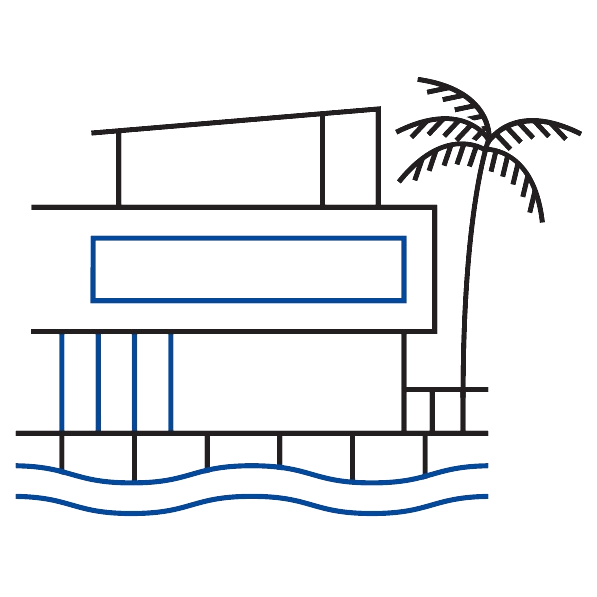
Zone VE design accounts for waves and an open foundation
VE zones are coastal high-hazard areas where wave action changes the foundation and enclosure strategy.
Buildings are generally elevated on piles, posts, piers, or columns, with the lowest horizontal structural member at or above the required elevation; below-building enclosures have strict limitations. Site-specific scour, erosion, and load-path design are essential.
Free Florida Engineering Tools
Related Resources
What Do People Ask About Understanding Flood Zone VE in Florida: A Guide for Property Owners?
What is the primary difference between Flood Zone AE and Flood Zone VE in Florida?
The key difference lies in wave action. Flood Zone AE indicates areas subject to inundation by the 100-year flood but without significant wave action. Flood Zone VE, however, signifies areas with high-velocity wave action (3 feet or greater) and coastal flooding, requiring much more robust construction methods and higher elevation requirements as per FBC 2023.
How does Flood Zone VE affect my property insurance in Florida?
Properties in Flood Zone VE typically face significantly higher flood insurance premiums due to the increased risk of damage from storm surge and wave action. Compliance with elevation and construction standards, as certified by an Elevation Certificate, can help mitigate these costs. FEMA's National Flood Insurance Program (NFIP) rates are directly impacted by this designation.
Can I build a garage or storage area below my house in Flood Zone VE?
Yes, but with strict limitations. Enclosures below the Base Flood Elevation (BFE) in Flood Zone VE are generally restricted to non-habitable uses like parking, building access, or limited storage. They must be constructed with breakaway walls designed to collapse under specific flood loads, preventing damage to the main structure. These are detailed in ASCE 7-22 and FBC 2023.
What is a 'freeboard' and why is it important in Flood Zone VE construction?
Freeboard is an additional height added above the Base Flood Elevation (BFE) for construction. It provides an extra margin of safety against floodwaters and wave action. Many Florida counties, like St. Johns County, mandate a specific freeboard (e.g., 1 or 2 feet) for new construction in VE zones, further enhancing resilience and potentially reducing flood insurance premiums.
Florida-Licensed · AR102594 · PE 39202 · Bilingual EN/ES
Ready to Start Your Project?
Pineland Engineering — Designda Inc. — serves residential and commercial clients statewide. FL Architecture AR102594 · Engineering PE 39202. PO Box 417, Pineland, FL 33945.